Japandi Style Living Room Ideas You Can Copy Today
If you’ve ever scrolled through interior design feeds and found yourself drawn to spaces that feel both warm and uncluttered, you’ve probably already encountered Japandi style. This design philosophy blends Scandinavian minimalism with Japanese wabi-sabi principles — and the result is one of the most liveable, calming aesthetics you can bring into your home in 2026.
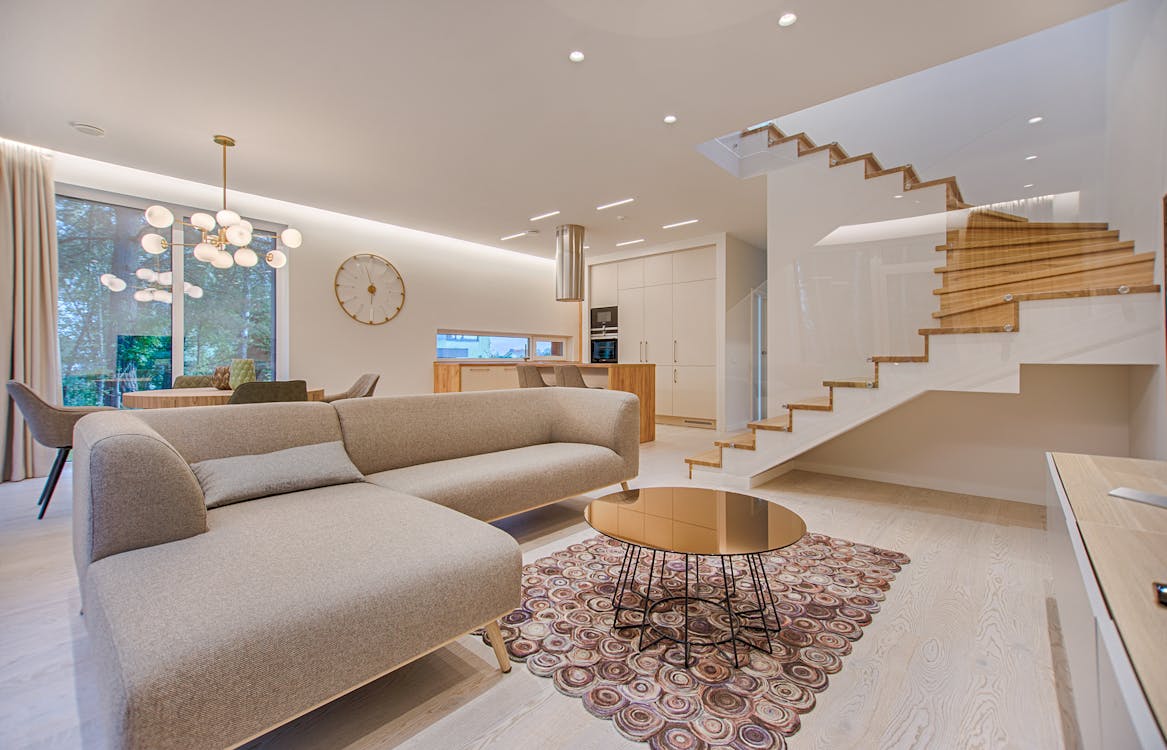
What Exactly Is Japandi Style?
Japandi is a portmanteau of “Japan” and “Scandi.” Both design traditions share a love for simplicity, natural materials, and intentional living. Where Scandinavian design leans toward light and hygge (coziness), Japanese aesthetics embrace ma — the beauty of negative space. Together, they create rooms that breathe.
The palette stays muted: think warm whites, soft greys, dusty terracotta, sage green, and deep charcoal as an accent. Furniture has low profiles, clean silhouettes, and visible wood grain. There are no unnecessary decorations. Every object earns its place.
Start with the Foundation: Floors and Walls
In a Japandi living room, the surfaces set the mood before you add a single piece of furniture. Light oak or ash wood floors are ideal — they bring warmth without overwhelming the space. If you have tiles or dark flooring, a large jute or natural wool rug does the same job and adds a tactile layer that Japandi rooms thrive on.
Walls should stay neutral. A warm off-white, linen, or muted sage works better than stark white, which can feel sterile. Consider limewash paint for added texture — it’s having a massive moment in 2026 and fits Japandi’s love of organic finishes perfectly.
💡 Quick Tip: Avoid glossy finishes. Japandi favors matte, raw, and hand-crafted textures that show the natural origin of materials.
Choose Furniture with Intention
The sofa is the anchor of your living room, so choose carefully. Look for low, streamlined frames in natural wood — walnut, oak, or bamboo. Upholstery should be in linen, boucle, or wool in a soft neutral. Avoid anything with decorative carved legs or ornate details.
A low coffee table in solid wood or stone is essential. Pair it with floor cushions for an authentic Japanese touch. For storage, opt for closed cabinetry — visible clutter is the enemy of Japandi. Sleek sideboards and floating shelves keep surfaces clean while providing function.
Layer Textures, Not Colors
Japandi rooms can feel flat if you stick only to solids. The secret is layering different textures within the same color family. Think a linen throw draped over a wool sofa cushion, placed on a jute rug beside a ceramic vase on a raw wood shelf. The colors may all be earthy neutrals, but the tactile variety keeps the room visually rich.
Plants are a key part of this layering. A single large fiddle-leaf fig or an architectural snake plant adds life without noise. A ceramic pot in matte terracotta or sage green ties back to the palette effortlessly.
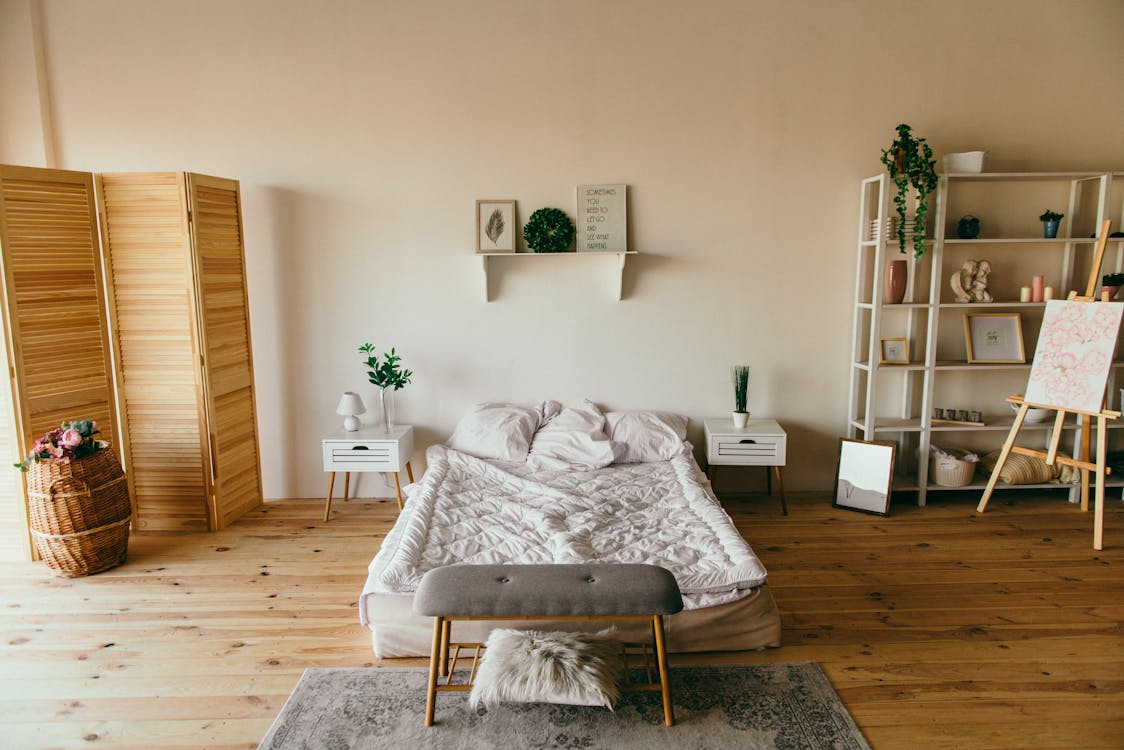
Light It the Right Way
Lighting in a Japandi room should feel soft and diffused — never harsh or industrial. Paper pendant lights (like a classic Akari lantern) are a direct nod to Japanese design and work beautifully over a coffee table or in a reading corner. Floor lamps with linen shades add warm pools of light in the evening.
If you have the option, maximize natural light during the day. Use sheer linen curtains rather than blackout blinds — they filter light beautifully and add movement to the room.
The Art of Editing: Less Really Is More
The final and most important step is ruthless editing. Japandi rooms are not empty — they’re intentional. Aim for one or two art pieces with simple frames, a small stack of books, and perhaps a single sculptural object. Every surface should feel considered, not decorated.
If you pick up a new piece and it doesn’t feel at home immediately, it probably doesn’t belong. The discipline of removing is just as important as the joy of adding.
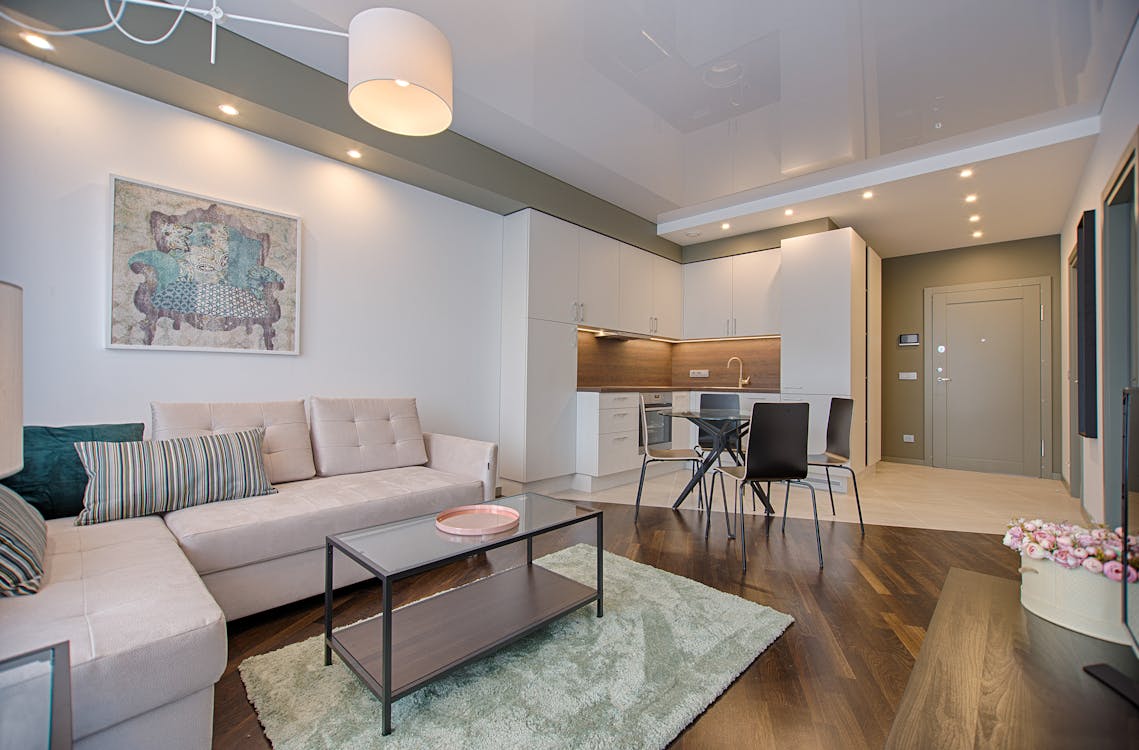
Japandi isn’t a trend — it’s a lifestyle shift toward quality over quantity, calm over chaos. Start with one corner of your living room, edit ruthlessly, and let the room breathe. You’ll find it hard to go back.
Japanese Minimalist Bedroom Ideas for Small Spaces
Small bedrooms often feel like a problem to solve. But in Japanese design philosophy, a compact room isn’t a limitation — it’s an invitation to be intentional. Japanese minimalist bedroom design turns constraint into elegance, and the approach works beautifully whether you’re working with 100 square feet or 300.
The Philosophy Behind the Style
Japanese interior design is rooted in the concept of ma — the idea that empty space is not absence, but presence. It’s what allows a room to feel restful rather than overwhelming. Combine that with wabi-sabi (the beauty of imperfection and natural materials) and you get a bedroom aesthetic that actively promotes sleep, calm, and clarity.
This is especially powerful for small spaces, because the principles naturally prevent overcrowding. You buy less, display less, and end up with more room to breathe — literally and mentally.
Start with the Bed: Go Low
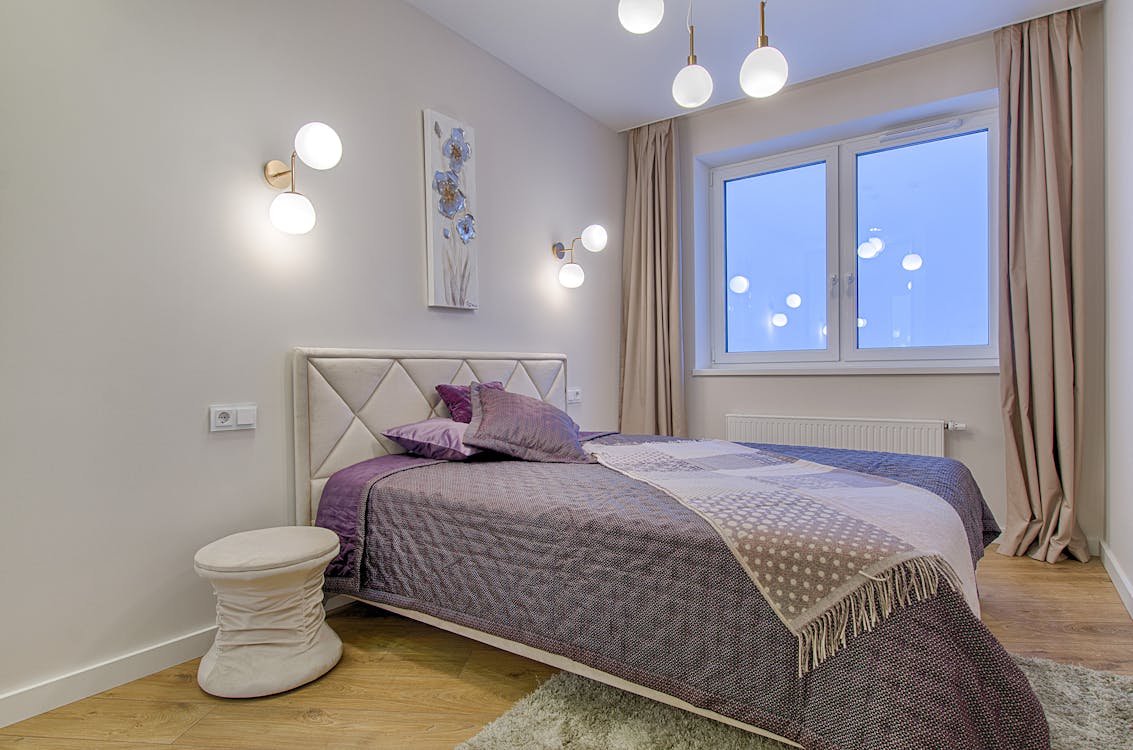
The most recognizable element of a Japanese bedroom is the low bed frame. Platform beds that sit close to the floor create a grounded, stable energy in the room. If you want to go further, a traditional tatami mat directly on the floor with a foldable futon is the original Japanese solution — it frees up the entire floor during the day.
In either case, keep the bedding simple. White or off-white linen, a single lightweight duvet, and one or two pillows. The bed should look like a place for deep sleep, not a styled photoshoot.
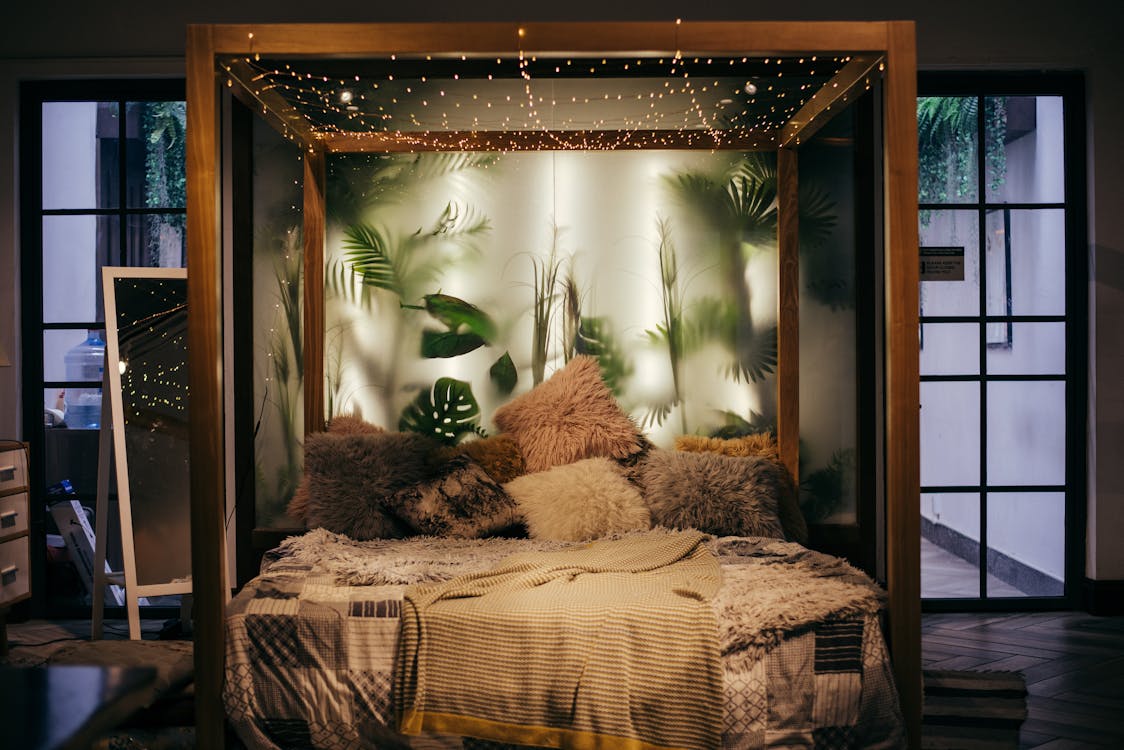
💡 Quick Tip: Resist the urge to add extra throw pillows. In Japanese minimalist design, the bed is kept simple to signal its purpose: rest.
Colors: Stay Inside the Earth’s Palette
For walls, white or very light warm grey is your safest starting point — they reflect light, making the room feel larger. From there, add depth through natural materials: a light wood headboard, a woven rattan storage basket, a terracotta clay vase on the windowsill.
If you want an accent, reach for nature: moss green, dusty clay, sand, or charcoal. These are found throughout Japanese design and never clash with each other. Avoid anything bright or synthetic-looking.
Storage That Disappears
Hidden storage is non-negotiable in a small Japanese bedroom. The goal is surfaces with nothing on them. Under-bed drawers, a minimal closet system with sliding doors (shoji-style if possible), and a single low nightstand with one drawer. That’s all you need.
If you must display something, make it a single intentional object: a small ceramic pot with one branch of dried pampas grass, or a stack of three books with clean spines. One thing, done well, beats ten things done casually.

Natural Elements and Soft Light
Wood, bamboo, stone, and natural fibers are the materials of Japanese interiors. In the bedroom, a bamboo or light wood nightstand works better than lacquered or metal alternatives. A jute or seagrass rug beside the bed adds warmth underfoot without visual noise.
For lighting, avoid overhead LED panels. A paper lantern-style pendant or a simple wooden arc floor lamp gives soft, diffused light that signals the brain to wind down. Add a dim bedside lamp if you read before sleep.
Keep the Floor Visible
This is the rule that separates true Japanese minimalism from just owning less stuff. In a Japanese bedroom, you should be able to see a large portion of the floor. It creates a visual sense of space that no amount of clever decorating can replicate. If furniture is blocking your view of the floor from the doorway, see what can be removed or reorganized.
The more floor you can see, the more spacious the room feels — regardless of its actual dimensions. This is the secret that makes small Japanese bedrooms look so effortlessly large in photos.

The Japanese minimalist bedroom is not about sacrifice — it’s about curation. Every element you keep should genuinely earn its place. The payoff is a room that feels bigger, calmer, and genuinely restorative every time you walk into it.
Wabi-Sabi Interior Design: What It Is and How to Get the Look
Not every beautiful thing is perfect. In fact, some of the most compelling interiors in 2026 are the ones that deliberately embrace cracks, roughness, fading, and age. That’s the essence of wabi-sabi — the Japanese philosophy of finding beauty in imperfection and impermanence — and it’s one of the most approachable interior design aesthetics you can adopt today.

What Does Wabi-Sabi Actually Mean?
Wabi refers to the rustic simplicity found in natural, modest objects. Sabi speaks to the beauty that comes with age and wear — the patina on copper, the grain of weathered wood, the uneven glaze on a handmade bowl. Together, wabi-sabi is a framework for noticing and appreciating these qualities rather than trying to erase them.
In interior design terms, this translates to spaces that feel lived-in, organic, and authentic. There are no perfect right angles, no glossy surfaces, no matchy-matchy sets. Instead, everything looks like it grew together naturally over time.
Materials: Natural, Raw, and Real
If you want the wabi-sabi look, start with your materials. Prioritize anything that shows its origin clearly: raw linen, unglazed ceramics, reclaimed wood, handwoven textiles, natural stone, and aged metal. These materials patina beautifully and look better with time rather than worse.
Avoid anything synthetic, high-gloss, or mass-produced that looks identical to a thousand other pieces. The handmade and the slightly irregular are celebrated in wabi-sabi, not hidden.
💡 Quick Tip: Shop secondhand and vintage for wabi-sabi. Items that already show age and wear are exactly what the aesthetic calls for — and they cost far less than new.
The Color Palette: Nature on a Cloudy Day
Wabi-sabi color palettes are drawn entirely from nature. Think the greys of weathered driftwood, the creamy off-white of river stones, the warm brown of dried reeds, the faded green of eucalyptus leaves, and the rust of iron left in the rain. Nothing is saturated or bright.
An easy formula: use white or warm linen for 60% of your room, warm wood and stone tones for 30%, and a single muted deeper tone (charcoal, rust, or olive) for 10%. This keeps the room calm while still having depth.
Decor: Intentional Imperfection
This is where wabi-sabi differs most from other minimal styles. You don’t need to hide all imperfections — a chipped vase, a worn edge on a wooden table, a slightly uneven ceramic mug on a shelf. These are not flaws to fix. They are the story of an object’s life.
Dried botanicals are a quintessential wabi-sabi element. Dried pampas grass, seedpods, branches with lichen, and pressed flowers all work beautifully. They celebrate the beauty of things past their peak — which is exactly the point. Fresh flowers are lovely but fleeting; dried ones tell a longer, more interesting story.
Texture Over Color
Because the palette is so restrained, texture does the heavy lifting in a wabi-sabi room. Layer rough linen cushions against a chunky knit throw. Place a smooth river stone next to a rough-edged wooden bowl. Let a woven seagrass rug contrast with the softness of a wool blanket on a slatted wood sofa.
The interplay of rough and soft, matte and slightly worn, fine and coarse — this is what makes wabi-sabi rooms so tactilely interesting even without a single bright color or bold pattern.
What to Avoid
The enemies of wabi-sabi are perfection, uniformity, and synthetic materials. Avoid matching furniture sets where everything is the same finish. Skip high-gloss lacquers, chrome hardware, and anything that looks like it could have come off a conveyor belt unchanged from 10,000 identical copies.
Also resist the urge to style your wabi-sabi room too carefully. The magic is in the slightly undone, the imperfectly arranged, the honest lived-in quality. Over-styling defeats the whole purpose.
Wabi-sabi is perhaps the most human of all interior design philosophies. It accepts time, wear, and impermanence not as problems but as the very qualities that make objects — and rooms — beautiful and meaningful.
Feng Shui Bedroom Layout: Tips for Better Sleep & Energy
You don’t need to believe in chi energy to benefit from feng shui bedroom principles. At their core, most feng shui rules are simply smart design decisions backed by thousands of years of observation about how people feel and sleep in different room configurations. Here’s how to apply them in 2026 for a bedroom that genuinely supports rest and well-being.
The Commanding Position: Where to Place Your Bed
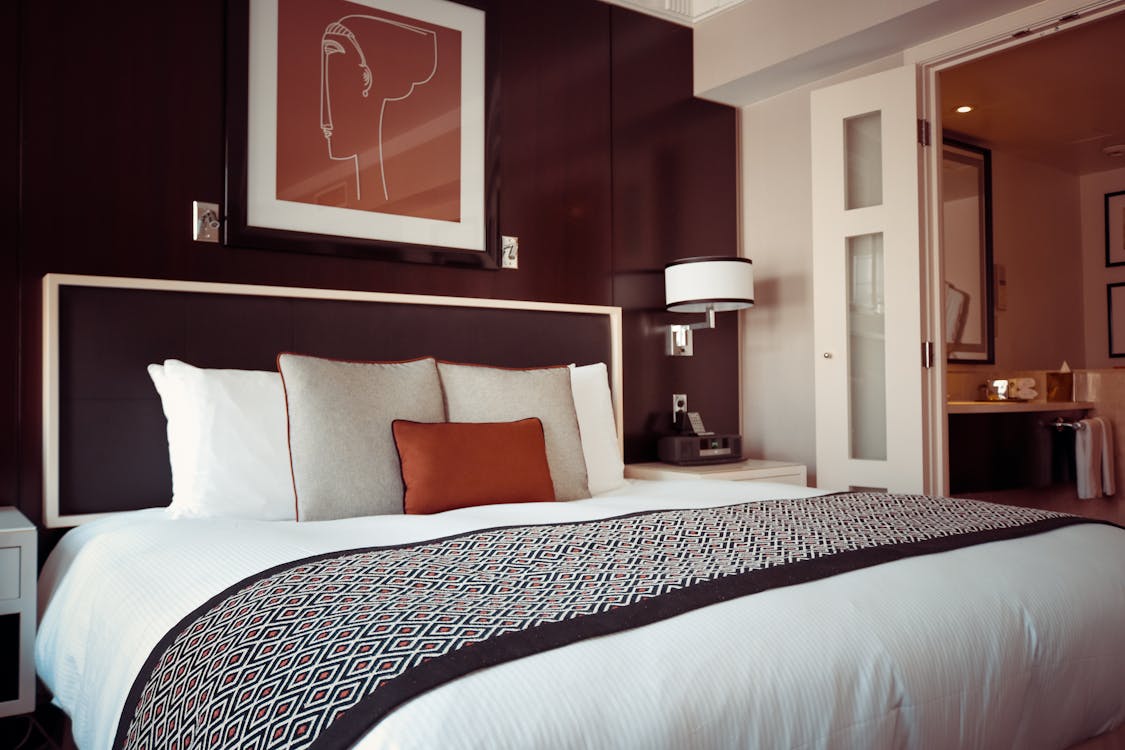
The most important feng shui principle for the bedroom is the commanding position. Your bed should be placed so you can see the door from where you lie without being directly in line with the door. This means positioning the bed diagonally across from the entrance, typically against a solid wall.
Why does this matter? When you can see who or what enters the room, your nervous system feels safe. That safety translates into deeper, more restful sleep. You should never sleep with your feet pointing directly at the door (known as the “coffin position” in feng shui) or with your head directly against a window.
The Headboard: Non-Negotiable Support
A solid headboard against a solid wall is a feng shui essential. It represents stability and support — both literally and energetically. Wood, upholstered fabric, or rattan all work well. Avoid metal headboards with sharp angles or open spindles. The headboard should feel protective, not porous.
The wall behind the bed should be solid — not a window, not a bathroom wall (if avoidable), and definitely not a shared wall with a toilet. If your layout doesn’t allow much flexibility, a robust headboard helps compensate.
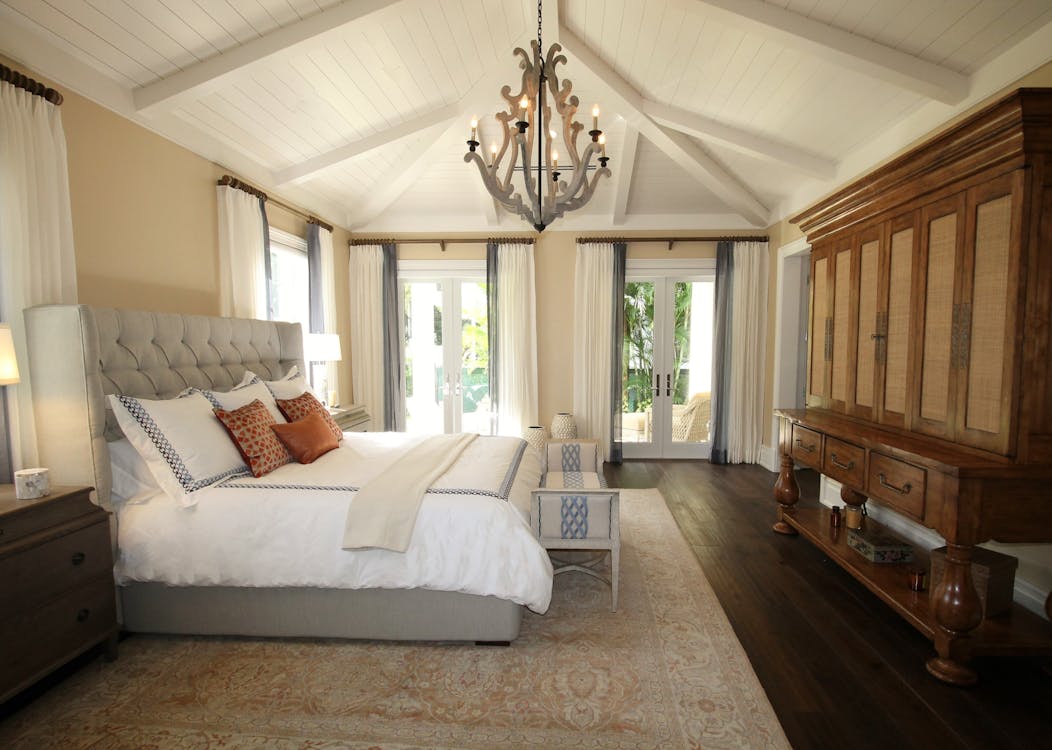
💡 Quick Tip: If you must sleep with your head near a window, use heavy curtains that can be fully closed to create a sense of solidity behind you while you sleep.
Colors That Support Rest
Feng shui bedroom colors are drawn from the earth and skin tones — shades that feel grounded and warm. Soft terracotta, warm cream, dusty rose, sage green, and muted blues all work well. These connect to the earth and water elements, both of which support rest and nourishment.
Avoid red, bright orange, or any highly stimulating color in a bedroom used for sleep. In feng shui, red activates fire energy — which is great for a kitchen or dining room, but counterproductive for a room meant for rest. Deep navy can work as an accent but use it sparingly.
Pairs and Symmetry
In feng shui, the bedroom is ideally designed to welcome and support partnership — even if you’re single. This means designing in pairs. Two nightstands (even if small), two lamps, two pillows on each side. This symmetry creates visual balance and a sense of equity in the space.
Avoid positioning the bed so only one side is accessible. Both sides of the bed should have clear pathways. If the room is very small, even a small stool or wall-mounted shelf on the tighter side counts as a nightstand.
What to Remove from the Bedroom
Feng shui is just as much about what you take out as what you put in. The bedroom is for rest and intimacy — not work, exercise, or storage. Ideally, remove the following if you can:
- Mirrors facing the bed — they’re said to bounce energy around the room, disrupting sleep. Cover them at night if you can’t move them.
- Electronics and screens — TVs, computers, and phones emit yang (active) energy that interferes with yin rest.
- Plants with spiky leaves — cacti and spiky succulents create what feng shui calls “poison arrows.” Opt for rounded, soft leaf plants like pothos or peace lily.
- Clutter under the bed — stagnant energy collects around stored objects. A clear under-bed space allows energy to circulate.
Light and Air Quality
Good feng shui requires good air and good light. Open windows daily to refresh the air — even briefly in winter. Choose natural fiber bedding (linen or cotton) that breathes. Use warm, dimmable lighting for the evening hours and ensure morning light can enter to signal the body to wake.
A small air-purifying plant — peace lily, snake plant, or pothos — adds both a living element and genuine air quality benefits. Keep it in a matte ceramic pot to stay within the aesthetic.
Whether you approach feng shui as ancient wisdom or simply as thoughtful spatial design, the result is the same: a bedroom that feels ordered, calm, and genuinely supportive of your rest. And that alone is worth the arrangement.
Korean Home Decor Trends to Try in 2026
Korean interior design has quietly become one of the most influential aesthetics in global home decor — and in 2026, its influence is stronger than ever. Blending the clean lines of Scandinavian minimalism with distinctly Korean warmth, practicality, and a love of nature, Korean home decor creates spaces that feel both polished and genuinely liveable.
The K-Design Aesthetic: What Sets It Apart
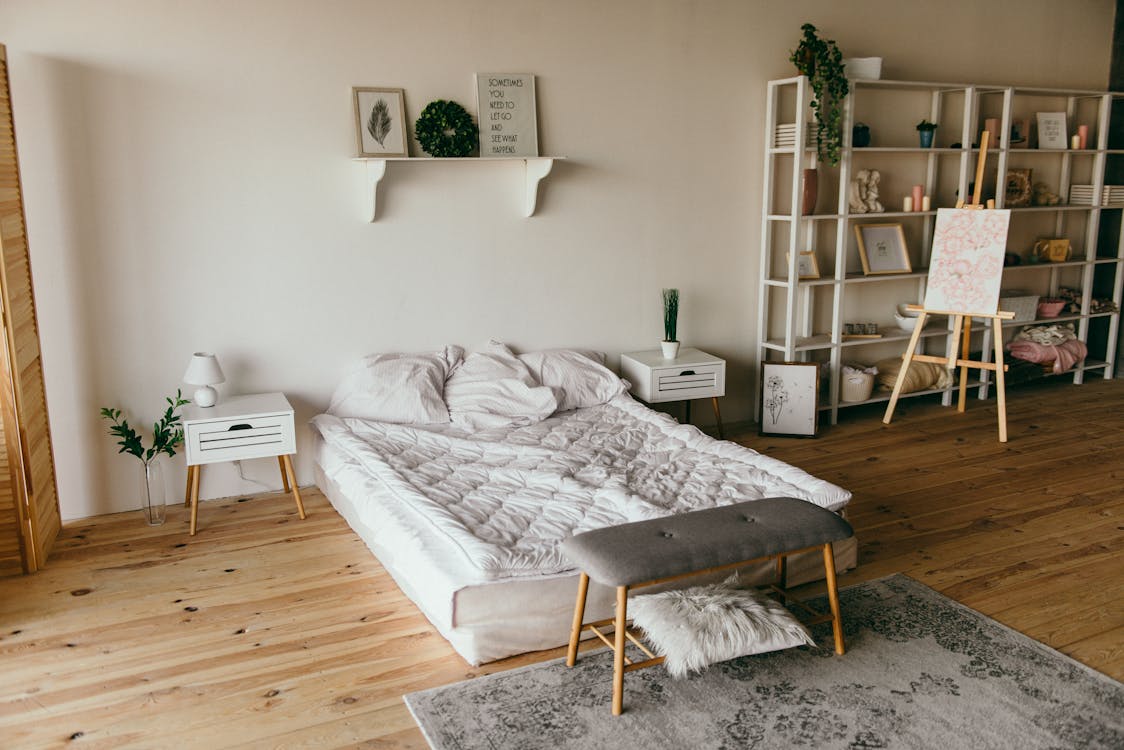
Korean home decor shares some DNA with Japandi and Nordic styles but has its own distinct character. It tends to be slightly more refined and color-forward than Japanese minimalism, and warmer and more nature-connected than Scandinavian style. There’s also a strong practicality to Korean design — furniture is multifunctional, storage is always considered, and small apartments are treated as worthy of just as much design attention as large ones.
The rise of Korean interior content on platforms like Pinterest and social media has introduced global audiences to concepts like sunlight-filled rooms, nature-forward greenery, and that particular shade of warm creamy white that seems to feature in every aspirational Korean apartment.
The Color Palette: Warm Whites and Earthy Accents
The foundation of Korean interior design in 2026 is a warm white or cream base — not stark white, but the creamy, slightly warm tone that reflects morning light beautifully. From there, accents come from earth tones: warm beige, caramel wood, soft sage, dusty blush, and the occasional deep olive or terracotta.
One trend to note this year is the return of greige (grey-beige) as a wall color — it pairs beautifully with natural wood and creates a sophisticated backdrop without the coldness of grey or the blandness of plain beige.

💡 Quick Tip: Layer two or three shades of the same neutral family rather than mixing many different colors. Korean interiors achieve depth through tone variation, not color contrast.
Furniture: Functional and Refined
Korean home furniture is chosen for both its form and its function. Popular choices include low-profile sofas with clean lines in linen or bouclé, rounded coffee tables in light wood or travertine, and multifunctional storage furniture that keeps everyday items out of sight.
The rounded silhouette trend that emerged a few years ago is still strong in Korean interiors — rounded sofas, oval coffee tables, and arched mirrors all soften the geometry of modern apartments. This is one of the most accessible trends to adopt, as a single curved mirror or table can change the feel of a whole room.
Plants: More Is More (But Make It Curated)
Unlike the strict minimalism of Japanese design, Korean home decor embraces plants generously. A statement fiddle-leaf fig in the corner, a trailing pothos on a floating shelf, a cluster of small succulents on the windowsill — greenery is treated as a design element, not just a living accessory.
The key is choosing the right pots. Matte ceramic in white, cream, sage, or terracotta keeps the plant collection feeling cohesive rather than chaotic. Matching pot styles in varying sizes creates a collected look rather than a cluttered one.

Lighting: Soft, Layered, and Warm
Korean interior lighting favors warmth and layering over single overhead sources. A combination of pendant lights, floor lamps, and table lamps creates different lighting zones for different times of day. The warm glow of evening lighting is as important as the natural daylight of morning.
Paper or linen lamp shades are favored for their soft diffusion. Exposed filament bulbs in warm amber temperatures (2700K–3000K) suit the aesthetic perfectly. Avoid cool or blue-toned LED lighting — it clashes with the warm palette and disrupts the cozy atmosphere Korean design aims to create.
The “Clean Corner” Principle
One practical principle from Korean home decor worth adopting is what interior designers sometimes call the clean corner: always keep at least one corner or surface in any room completely clear. In a styled Korean home, even as plants, books, and ceramics fill shelves, there’s always a deliberate empty space — a breath in the composition that keeps the room from feeling crowded.
Apply this to your own space: for every surface you style, leave one equal surface empty. The contrast makes both feel more intentional.
Korean home decor succeeds because it refuses to choose between beauty and practicality. In 2026, as more people look for homes that genuinely support daily life without sacrificing aesthetics, this philosophy feels more relevant than ever.
Bamboo Furniture: Pros, Cons, and Best Picks for 2026
Bamboo has moved well beyond garden screens and cutting boards. In 2026, bamboo furniture is appearing in living rooms, bedrooms, and home offices as a credible, stylish alternative to both solid wood and synthetic materials. But is it right for your home? Here’s an honest look at the pros, cons, and best picks this year.

Why Bamboo Is Having a Moment in 2026
Bamboo isn’t new, but its place in contemporary interior design has never been stronger. Several factors have converged: growing interest in sustainable materials, the popularity of biophilic design (bringing nature indoors), and improvements in bamboo processing that have made modern bamboo furniture more durable and refined than previous generations.
It also fits perfectly into the dominant aesthetics of 2026 — Japandi, wabi-sabi, and Korean home decor — all of which prize natural materials and organic textures. Bamboo’s warm honey tones and subtle grain pattern work beautifully in neutral, nature-forward interiors.
The Pros of Bamboo Furniture
Sustainability: Bamboo is one of the fastest-growing plants on earth, reaching maturity in 3–5 years compared to 20–50 years for most hardwoods. It regenerates without replanting and sequesters significant carbon. For environmentally conscious buyers, this is a major advantage.
Strength: Engineered bamboo (where fibers are compressed and bonded under heat) can achieve tensile strength comparable to steel by weight. Well-made bamboo furniture holds up to daily use remarkably well.
Aesthetics: Bamboo has a warm, light tone that complements nearly any neutral interior palette. It doesn’t feel as heavy visually as dark walnut or as cold as metal — it occupies a sweet spot that works across many styles.
Price: High-quality bamboo furniture typically costs less than equivalent solid hardwood pieces, making it accessible for a wider range of budgets.

💡 Quick Tip: Look for ‘strand-woven’ or ‘compressed bamboo’ furniture rather than traditional hollow-culm bamboo. Strand-woven is significantly more durable and resistant to moisture and warping.
The Cons of Bamboo Furniture
Moisture sensitivity: Bamboo does not love high humidity or prolonged moisture exposure. In very humid climates or rooms like bathrooms, bamboo furniture can warp, crack, or grow mold if not properly treated and maintained. Look for pieces with a good sealant if you live somewhere humid.
Quality variation: The bamboo furniture market has a wide quality range. Cheap bamboo pieces (often hollow-construction) can feel flimsy and may split along the grain under load. Always buy from reputable manufacturers with clear quality specs.
Limited styles: While bamboo design has expanded significantly, the material still lends itself more naturally to certain styles (Asian-inspired, natural, coastal) than others. If your interior is very industrial or ultra-modern, bamboo may feel out of place.
Scratching: Bamboo surfaces, while hard, can scratch more easily than some hardwoods. Using coasters and felt pads under objects is recommended.
Best Bamboo Furniture Picks for 2026
Dining chairs: Strand-woven bamboo dining chairs with a natural or dark stained finish work beautifully in any neutral dining room. They’re lighter than solid wood equivalents and stack for easy storage.
Shelving units: Bamboo open shelving is one of the most practical applications — strong enough for books and ceramics, and visually lighter than wood equivalents. Perfect for a home office or living room display.
Coffee tables: A low bamboo coffee table with a tempered glass top combines the natural aesthetic of bamboo with the practicality of a scratch-resistant surface.
Bed frames: Platform bed frames in compressed bamboo are an excellent choice — they pair beautifully with natural linen bedding and have enough strength to support a quality mattress without creaking.

How to Care for Bamboo Furniture
Bamboo furniture is low-maintenance but does benefit from some basic care. Wipe spills immediately with a dry cloth. Avoid placing bamboo in direct, prolonged sunlight as UV exposure can fade and dry out the surface. Every 6–12 months, a light application of bamboo oil or food-grade mineral oil keeps the surface conditioned and resistant to moisture.
Keep bamboo away from heating vents and radiators — the dry heat can cause cracking. In very humid climates, a room with good ventilation and moderate air conditioning helps bamboo furniture last significantly longer.
If you’re looking for furniture that is beautiful, sustainable, and genuinely versatile, bamboo deserves serious consideration in 2026. The key, as always, is buying quality — look for well-engineered pieces from transparent manufacturers, and this natural material will reward you for years.
How to Decorate a Small Apartment in Asian Style
Decorating a small apartment can feel like a constant negotiation between what you need and what you can fit. Asian design traditions — particularly Japanese and Korean approaches — have spent centuries mastering exactly this challenge. Here’s how to decorate a small apartment in Asian style in a way that feels spacious, calm, and genuinely beautiful.
Embrace the Small Space, Don’t Fight It
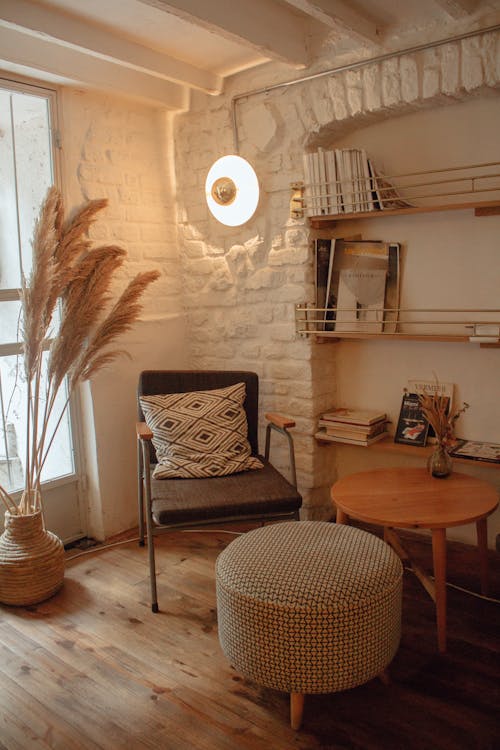
The first step is a mindset shift. In Asian design philosophy — particularly Japanese — a small space is not a problem to overcome. It’s a framework that naturally imposes discipline and intentionality. You simply cannot afford clutter. That constraint becomes a feature, not a bug.
Once you accept that your small apartment will work best with fewer things rather than more, every subsequent decision becomes easier. You’re not trying to trick the eye into thinking it’s larger — you’re designing a space that genuinely functions and feels good at its actual size.
Furniture: Low, Light, and Multifunctional
Low-profile furniture is essential in a small apartment styled with Asian influence. A low sofa, a floor-level coffee table, or a platform bed all keep the eye level low, which makes ceilings feel higher and the overall space more open. Furniture with visible legs is preferable to pieces that sit flush with the floor — the negative space underneath adds visual air.
Every piece of furniture should ideally serve more than one function. A storage ottoman replaces both a coffee table and a storage box. A daybed can serve as sofa and guest bed. A fold-down desk mounts to the wall when not in use. In Japanese homes, this kind of multi-purpose thinking is deeply embedded in the design culture, and it works brilliantly for small apartments anywhere.
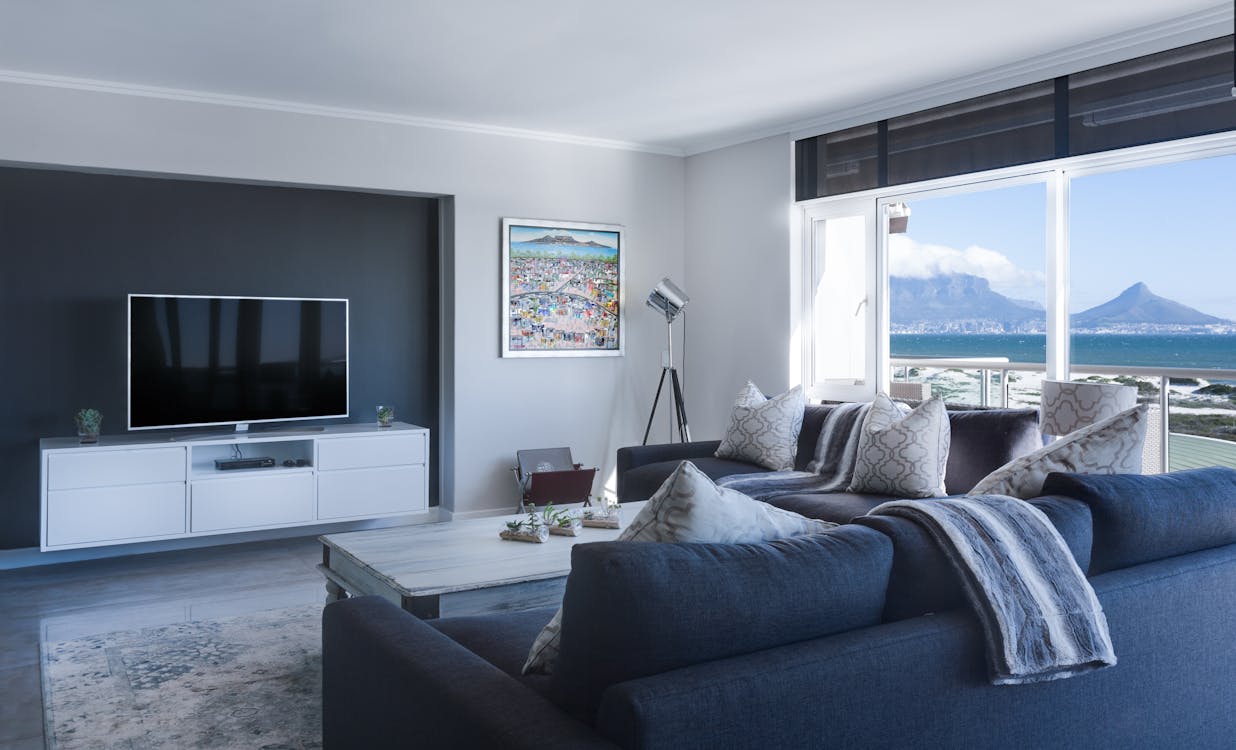
💡 Quick Tip: In a small apartment, vertical space is your greatest underused resource. Tall shelving units, wall-mounted storage, and hanging plants draw the eye upward and effectively expand the room.
The Palette: Light, Warm, and Consistent
In a small space, a consistent, light palette does more work than any furniture arrangement. Use one neutral base color throughout the apartment — warm white, cream, or light warm grey — and let texture and natural materials create the variation. Shifting to a new color in each room (or each corner) makes a small apartment feel fragmented and smaller than it is.
Warm wood accents, rattan touches, and matte ceramics in earthy tones add depth within the unified palette. If you want a stronger accent, choose one: sage green, dusty blush, or terracotta — and use it sparingly across the space as a thread that ties rooms together.
Sliding Doors and Open Plans
Traditional Japanese architecture solves the small-space problem partly through the shoji screen — a sliding paper-panel door that separates spaces without the swing radius of a conventional door and lets light pass through. In a modern apartment, this concept translates to sliding room dividers, sliding wardrobe doors, or even curtains used as room dividers rather than solid walls.
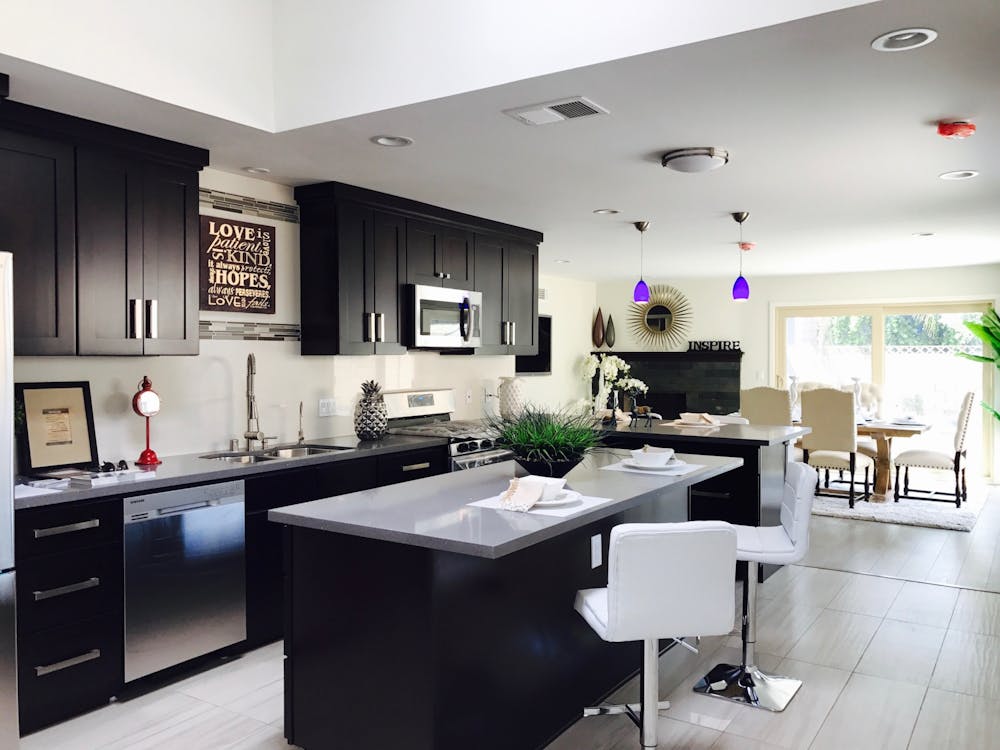
Opening up the plan wherever possible — removing or minimizing partitions between kitchen and living areas — is another key move. Combined with a consistent palette, an open plan makes a small apartment feel significantly larger without any construction required.
Nature as Decor
Plants, natural materials, and the presence of water or stone are central to Asian design thinking. In a small apartment, a few well-chosen plants do multiple things: they add life and color, improve air quality, and soften the edges of a minimal space without adding visual clutter.
Choose plants that suit the light conditions honestly. A trailing pothos on a high shelf, a small snake plant on a windowsill, or a single large monstera in a corner all work well in small spaces. Keep pots in a consistent material and color family — all matte ceramic, for example — to avoid the visual chaos of mismatched plant pots.
Zoning Without Walls
In a studio or very small apartment, creating distinct zones for sleeping, living, and working is important for mental wellbeing — but walls aren’t the only way to do it. Use rugs to define different areas. A low bookshelf can create a visual boundary between a living area and a sleeping nook. Lighting zones — a warm lamp for the reading corner, different ambient light for the sleeping area — also signal different functions without any physical division.
This approach, borrowed directly from Japanese apartment design, makes a single room feel like multiple intentional spaces while keeping the floor plan open and the light flowing freely.
Asian design philosophy offers a genuinely better way to live in a small apartment: not by fighting the constraints, but by working with them to create spaces that are more intentional, calmer, and ultimately more satisfying than rooms twice their size filled with twice as much stuff.
Zen Living Room Ideas: Create a Calm Space at Home
The living room is the room that takes the most from us: it’s where we decompress after work, entertain friends, watch too much TV, and try to relax. It’s also often the most cluttered room in the home. A zen living room is the antidote — a space intentionally designed to calm the nervous system rather than stimulate it. Here’s how to create one in 2026.
Understand the Goal Before You Start
A zen living room is not just a minimalist living room with some cushions. It’s a space designed with a specific function in mind: restoration. Every design decision should be filtered through one question: does this help me relax, or does it ask something of me?
Clutter asks something of you — it signals unfinished business. Bright colors stimulate. Screens demand attention. Hard, echoing surfaces make rooms feel agitated. A zen room reduces all of these inputs and replaces them with things that ask nothing: soft surfaces, natural materials, diffused light, and breathing space.
Clear First, Decorate Second
Before you buy a single new thing, remove. Walk through your living room and identify everything that has no clear purpose or that you don’t genuinely love. The books you’ll never re-read, the decorative objects that feel more like obligation than joy, the extra throw pillows, the tangled cables, the items that ended up there because they had nowhere else to go.
A room cleared of excess is already more zen. You may find that after clearing, you need to buy very little to reach the atmosphere you want.
💡 Quick Tip: Before adding any new decor, try living with your cleared-out room for a week. You’ll quickly learn which additions the room genuinely needs versus which ones you were reaching for out of habit.
Choose a Calming Palette
Zen living room color palettes draw from nature in its quieter moments: the grey of morning mist, the warm white of sea-worn stone, the soft green of moss, the brown of tree bark. These are colors that don’t demand attention — they recede and let the room breathe.
White is the most obvious choice, but warm white rather than cool or stark. Add depth through wood tones, a natural fiber rug in oatmeal or sand, and one soft accent color — sage, dusty blue, or muted terracotta — used in textiles only.
Furniture: Necessary, Comfortable, and Natural
A zen living room needs very little furniture: a sofa you genuinely love to sit in, a coffee table, and perhaps one additional seating option. That’s often it. The sofa should be comfortable first — zen is not about aesthetic suffering. Low profiles work well, as do sofas with removable cushions in natural linen or cotton that can be washed and kept fresh.
Floor seating — cushions, a low chair, meditation pillows — is an excellent addition if you genuinely use it. Sitting at floor level has a naturally grounding, calming effect. A low wooden platform for seating or a zazen-style meditation cushion in a corner creates a dedicated restoration zone within the room.

Light: The Most Underrated Element
Lighting transforms mood more than almost any other design element, and most living rooms get it wrong by relying on a single overhead source. For a zen living room, layer your lighting: a floor lamp in the corner, a table lamp on the side table, candles (or candle-like LED alternatives) for evening hours.
The goal is to move from bright, evenly lit (which signals alertness) to pools of warm, gentle light (which signals relaxation) as the evening progresses. A dimmer switch on any overhead light is one of the highest-ROI changes you can make for a modest cost.
Sound and Scent: The Often-Forgotten Senses
Zen spaces engage more than just vision. Consider the acoustics of your living room — a room with rugs, cushions, curtains, and soft furniture absorbs sound rather than bouncing it, which immediately feels calmer. Hard-surfaced rooms echo and feel agitated even when visually minimal.
Scent matters too. A simple reed diffuser or a clean-burning soy candle in a natural fragrance — cedar, sandalwood, hinoki, or eucalyptus — adds a layer of calm that you feel before you consciously notice it. These are small touches, but they shift the atmosphere of a room meaningfully.
One Natural Element, Chosen Well
Every zen living room benefits from one living element: a plant, a vase of dried botanicals, a bowl of smooth stones, or a small water feature. These natural elements ground the space in something real and unchanging. They don’t need to be many — one large, healthy plant in a beautiful pot does more than five mediocre ones.
The plant you choose matters less than the health and placement. A thriving plant in a beautiful pot, given proper light, adds more to a zen room than any styled shelf of objects ever could.
Creating a zen living room is ultimately an act of intention — deciding what the room is for and designing everything around that purpose. In 2026, when the demands on our attention have never been greater, a room designed to restore rather than stimulate might be the most valuable thing in your home.