Feng Shui Bedroom Layout: Tips for Better Sleep & Energy
You don’t need to believe in chi energy to benefit from feng shui bedroom principles. At their core, most feng shui rules are simply smart design decisions backed by thousands of years of observation about how people feel and sleep in different room configurations. Here’s how to apply them in 2026 for a bedroom that genuinely supports rest and well-being.
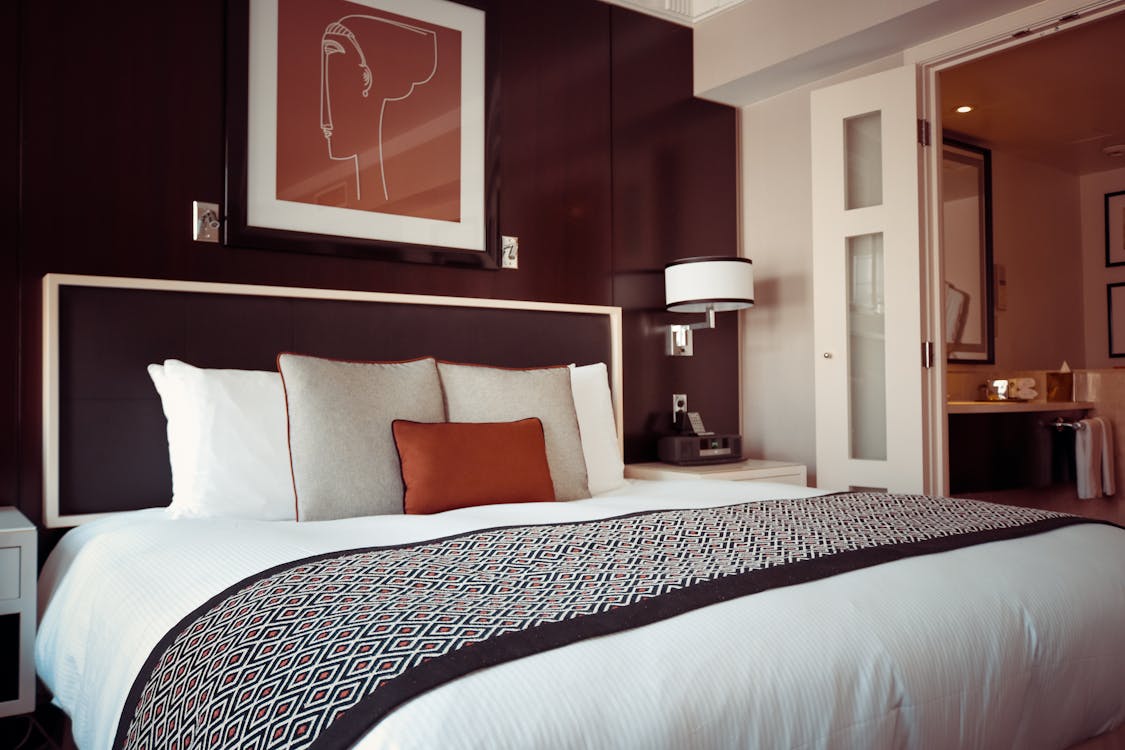
The Commanding Position: Where to Place Your Bed
The most important feng shui principle for the bedroom is the commanding position. Your bed should be placed so you can see the door from where you lie without being directly in line with the door. This means positioning the bed diagonally across from the entrance, typically against a solid wall.
Why does this matter? When you can see who or what enters the room, your nervous system feels safe. That safety translates into deeper, more restful sleep. You should never sleep with your feet pointing directly at the door (known as the “coffin position” in feng shui) or with your head directly against a window.
The Headboard: Non-Negotiable Support
A solid headboard against a solid wall is a feng shui essential. It represents stability and support — both literally and energetically. Wood, upholstered fabric, or rattan all work well. Avoid metal headboards with sharp angles or open spindles. The headboard should feel protective, not porous.
The wall behind the bed should be solid — not a window, not a bathroom wall (if avoidable), and definitely not a shared wall with a toilet. If your layout doesn’t allow much flexibility, a robust headboard helps compensate.
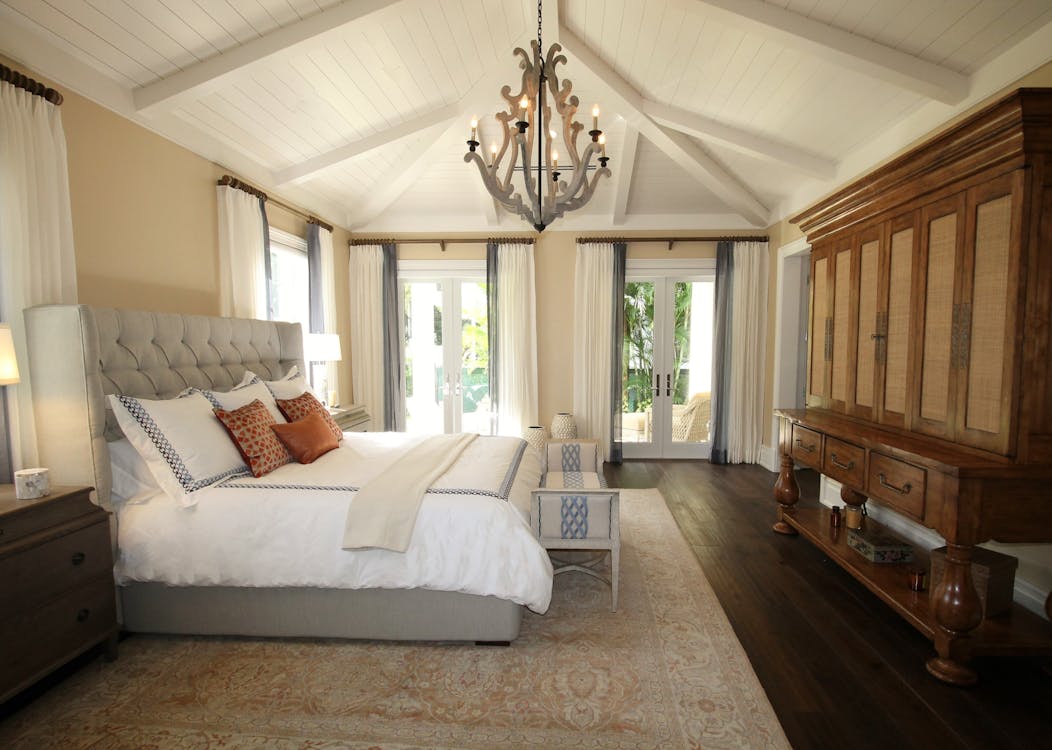
💡 Quick Tip: If you must sleep with your head near a window, use heavy curtains that can be fully closed to create a sense of solidity behind you while you sleep.
Colors That Support Rest
Feng shui bedroom colors are drawn from the earth and skin tones — shades that feel grounded and warm. Soft terracotta, warm cream, dusty rose, sage green, and muted blues all work well. These connect to the earth and water elements, both of which support rest and nourishment.
Avoid red, bright orange, or any highly stimulating color in a bedroom used for sleep. In feng shui, red activates fire energy — which is great for a kitchen or dining room, but counterproductive for a room meant for rest. Deep navy can work as an accent but use it sparingly.
Pairs and Symmetry
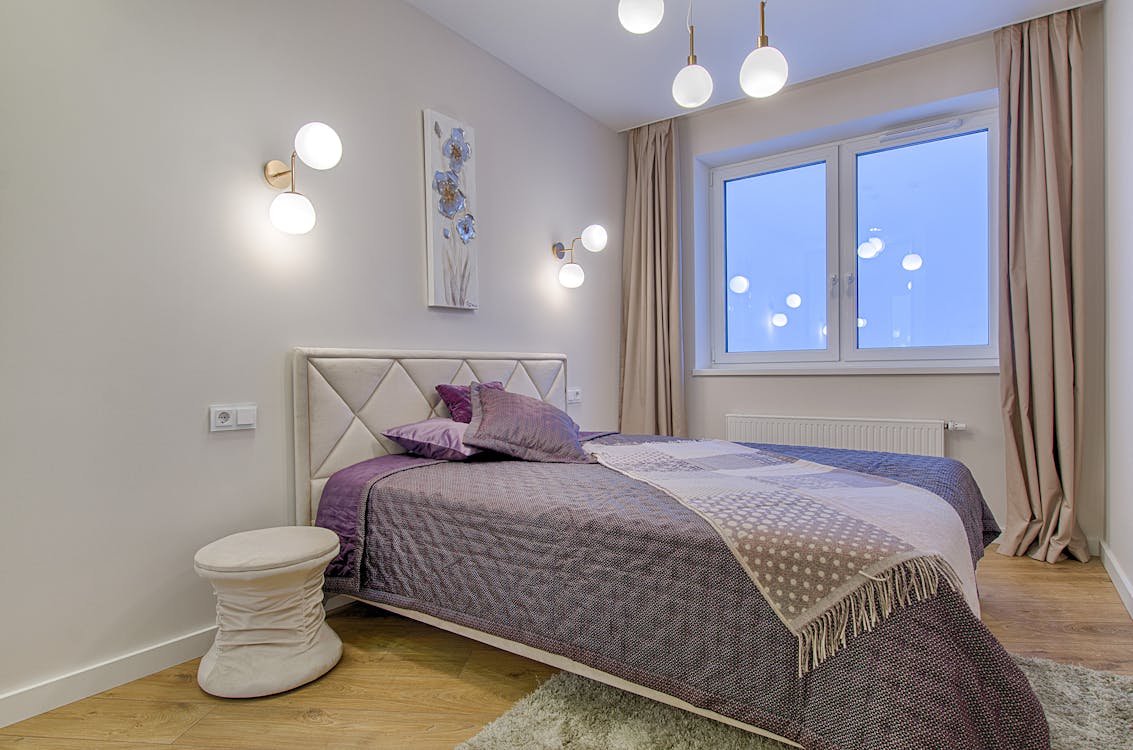
In feng shui, the bedroom is ideally designed to welcome and support partnership — even if you’re single. This means designing in pairs. Two nightstands (even if small), two lamps, two pillows on each side. This symmetry creates visual balance and a sense of equity in the space.
Avoid positioning the bed so only one side is accessible. Both sides of the bed should have clear pathways. If the room is very small, even a small stool or wall-mounted shelf on the tighter side counts as a nightstand.
What to Remove from the Bedroom
Feng shui is just as much about what you take out as what you put in. The bedroom is for rest and intimacy — not work, exercise, or storage. Ideally, remove the following if you can:
- Mirrors facing the bed — they’re said to bounce energy around the room, disrupting sleep. Cover them at night if you can’t move them.
- Electronics and screens — TVs, computers, and phones emit yang (active) energy that interferes with yin rest.
- Plants with spiky leaves — cacti and spiky succulents create what feng shui calls “poison arrows.” Opt for rounded, soft leaf plants like pothos or peace lily.
- Clutter under the bed — stagnant energy collects around stored objects. A clear under-bed space allows energy to circulate.
Light and Air Quality
Good feng shui requires good air and good light. Open windows daily to refresh the air — even briefly in winter. Choose natural fiber bedding (linen or cotton) that breathes. Use warm, dimmable lighting for the evening hours and ensure morning light can enter to signal the body to wake.
A small air-purifying plant — peace lily, snake plant, or pothos — adds both a living element and genuine air quality benefits. Keep it in a matte ceramic pot to stay within the aesthetic.
Whether you approach feng shui as ancient wisdom or simply as thoughtful spatial design, the result is the same: a bedroom that feels ordered, calm, and genuinely supportive of your rest. And that alone is worth the arrangement.