Wabi-Sabi Interior Design: What It Is and How to Get the Look
Not every beautiful thing is perfect. In fact, some of the most compelling interiors in 2026 are the ones that deliberately embrace cracks, roughness, fading, and age. That’s the essence of wabi-sabi — the Japanese philosophy of finding beauty in imperfection and impermanence — and it’s one of the most approachable interior design aesthetics you can adopt today.

What Does Wabi-Sabi Actually Mean?
Wabi refers to the rustic simplicity found in natural, modest objects. Sabi speaks to the beauty that comes with age and wear — the patina on copper, the grain of weathered wood, the uneven glaze on a handmade bowl. Together, wabi-sabi is a framework for noticing and appreciating these qualities rather than trying to erase them.
In interior design terms, this translates to spaces that feel lived-in, organic, and authentic. There are no perfect right angles, no glossy surfaces, no matchy-matchy sets. Instead, everything looks like it grew together naturally over time.
Materials: Natural, Raw, and Real
If you want the wabi-sabi look, start with your materials. Prioritize anything that shows its origin clearly: raw linen, unglazed ceramics, reclaimed wood, handwoven textiles, natural stone, and aged metal. These materials patina beautifully and look better with time rather than worse.
Avoid anything synthetic, high-gloss, or mass-produced that looks identical to a thousand other pieces. The handmade and the slightly irregular are celebrated in wabi-sabi, not hidden.
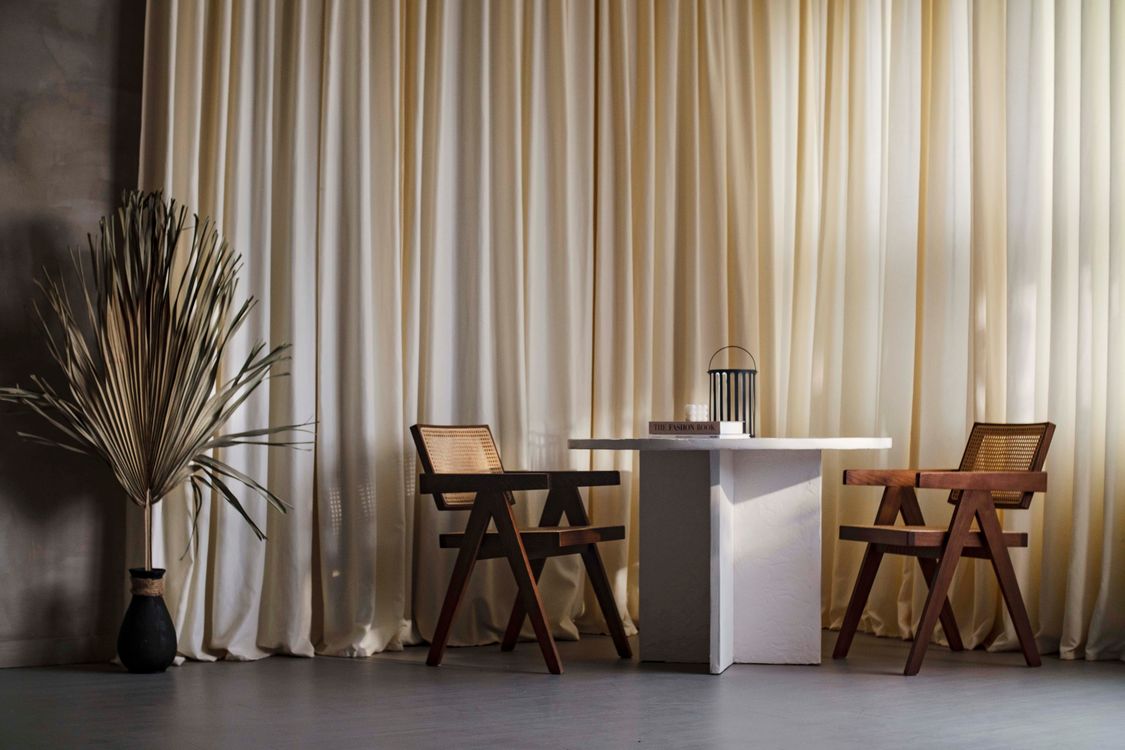
💡 Quick Tip: Shop secondhand and vintage for wabi-sabi. Items that already show age and wear are exactly what the aesthetic calls for — and they cost far less than new.
The Color Palette: Nature on a Cloudy Day
Wabi-sabi color palettes are drawn entirely from nature. Think the greys of weathered driftwood, the creamy off-white of river stones, the warm brown of dried reeds, the faded green of eucalyptus leaves, and the rust of iron left in the rain. Nothing is saturated or bright.
An easy formula: use white or warm linen for 60% of your room, warm wood and stone tones for 30%, and a single muted deeper tone (charcoal, rust, or olive) for 10%. This keeps the room calm while still having depth.
Decor: Intentional Imperfection
This is where wabi-sabi differs most from other minimal styles. You don’t need to hide all imperfections — a chipped vase, a worn edge on a wooden table, a slightly uneven ceramic mug on a shelf. These are not flaws to fix. They are the story of an object’s life.
Dried botanicals are a quintessential wabi-sabi element. Dried pampas grass, seedpods, branches with lichen, and pressed flowers all work beautifully. They celebrate the beauty of things past their peak — which is exactly the point. Fresh flowers are lovely but fleeting; dried ones tell a longer, more interesting story.
Texture Over Color
Because the palette is so restrained, texture does the heavy lifting in a wabi-sabi room. Layer rough linen cushions against a chunky knit throw. Place a smooth river stone next to a rough-edged wooden bowl. Let a woven seagrass rug contrast with the softness of a wool blanket on a slatted wood sofa.
The interplay of rough and soft, matte and slightly worn, fine and coarse — this is what makes wabi-sabi rooms so tactilely interesting even without a single bright color or bold pattern.
What to Avoid
The enemies of wabi-sabi are perfection, uniformity, and synthetic materials. Avoid matching furniture sets where everything is the same finish. Skip high-gloss lacquers, chrome hardware, and anything that looks like it could have come off a conveyor belt unchanged from 10,000 identical copies.
Also resist the urge to style your wabi-sabi room too carefully. The magic is in the slightly undone, the imperfectly arranged, the honest lived-in quality. Over-styling defeats the whole purpose.
Wabi-sabi is perhaps the most human of all interior design philosophies. It accepts time, wear, and impermanence not as problems but as the very qualities that make objects — and rooms — beautiful and meaningful.